

Microgrid System Customization
Bespoke microgrid engineering — design, equipment selection, simulation and commissioning against your load and grid conditions.
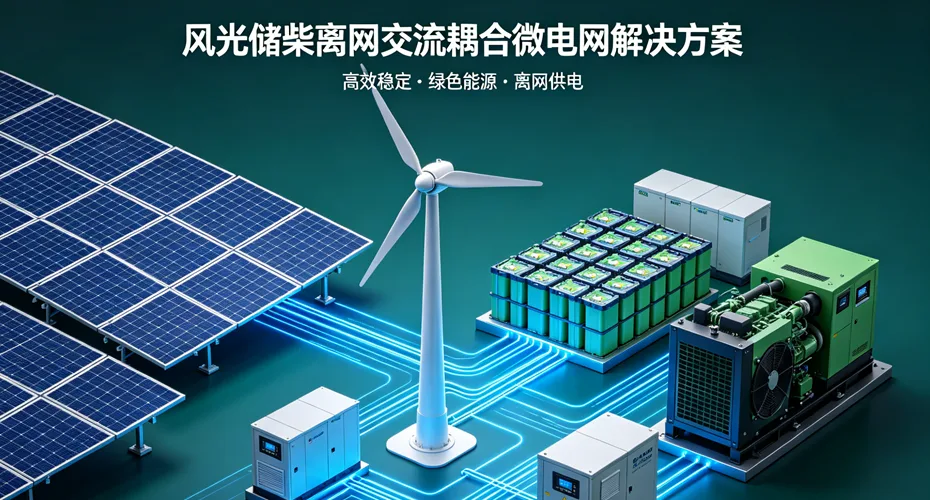
Microgrid customization: sizing is a design problem, not a shopping list
A customized microgrid is not about stacking equipment — it is about getting the ratio between power and capacity right. One megawatt of PV and two megawatt-hours of battery configured for an island village, an injection-moulding plant and an oilfield wellhead will end up as three very different systems. VGRID starts every project from the load profile, overlays local irradiation, wind, diesel cost and tariff structure, verifies the result over 8,760 hours of time-series simulation, and only then freezes the single-line diagram, cabinet layout, EMS strategy and factory acceptance test. Tell us how much load you have and how long it must stay up — we take it from there.
- 100 kW–20 MWPower range per project, expandable by paralleling cabinets
- ≤20 msGrid-to-island transfer time (static transfer switch)
- ≥99.9%Supply availability target typical of our projects
- 8–16 weeksFrom frozen design to factory acceptance
1. When a custom design is genuinely worth it
Standard power classes (125 kW/261 kWh, 2 MW/4 MWh BESS and similar) suit commercial sites with regular loads and a healthy grid — fast to specify, fast to deliver. The situations below usually push a standard product into an expensive oversize.
Standard product is enough
Smooth load, simple tariff, stiff grid.
- Daily load curve is flat; peaks stay below 1.5× rating
- Operations are grid-tied: tariff arbitrage or standby duty only
- Transformer capacity is ample, no expansion constraint
- No unusual transport, footprint or cabling limits
Ask for a custom design
One hit is enough to justify it.
- No utility, daily outages, or weak voltage at the feeder end
- Large motors, welders or crushers create inrush events
- Autonomy defined in hours: 8 h / 24 h / 72 h
- Diesel is expensive to land, so fuel saving drives the business case
- Chargers overload the transformer and dynamic capacity is needed
2. The six layers you actually customize
A microgrid is six layers working together. Customization means giving a clear answer for every one of them.
Generation: PV / wind / genset
Check the array against annual yield and worst month. PV is commonly oversized 1.2–1.6× the PCS rating, trading a little curtailment for many more productive hours. High-latitude or pronounced rainy-season sites must be checked against their worst month.
Storage: battery racks and BMS
Capacity follows "protected load × hours ÷ (depth of discharge × efficiency)"; power follows the largest inrush and the minimum genset loading. When storage also does peak shaving, degradation cost per cycle belongs in the model.
Conversion: storage inverters and MPPT
The PCS sets voltage support, transfer time and how many units can run in parallel; MPPT and DC/DC stages decide how much of each string you actually harvest. DC coupling removes one conversion, AC coupling makes staged expansion easier.
Transfer: grid-forming and bypass
Transfer can sit inside the PCS (below 10 ms) or live in a dedicated STS module (below 20 ms, available at 200/400/600 kW). Critical feeders get a maintenance bypass so work never costs you an outage.
Distribution: cabinets, protection, environment
IP54/IP65 enclosures, isolation transformers, surge protection and anti-corrosion treatment are what decide whether the plant survives desert heat, coastal salt or plateau cold. Cabinet layout is also constrained by site lifting and transport dimensions.
Management: energy management and remote O&M
Peak shaving, demand tracking, SOC schedules, genset start/stop and priority load shedding all live here. This layer decides how different two identical hardware installations look on the annual electricity or fuel bill.
3. Six steps to a finished design
Load profile
Typical daily curve, peak demand factor, inrush list with duration, share of critical load and tolerated interruption time.
Resources and constraints
Annual and worst-month irradiation, wind distribution, landed diesel price, tariff periods and demand charges, existing transformer capacity.
Ratio and topology
AC or DC coupling, isolation transformer or not, internal or external STS, genset participation.
8,760-hour simulation
Hour-by-hour verification of continuity, curtailment, genset hours and SOC floors, plus an annual cost or fuel statement.
Engineering package
Single-line diagram, cabinet layout, cable sizing and voltage drop, protection settings, earthing, lightning protection and service access.
Factory and site acceptance
Full-power FAT including transfer, bypass, harmonics and temperature rise, then SAT on site and handover of logs and spare parts list.
4. Three formulas we use every week
Rules of thumb that frame the order of magnitude; every real proposal is converged with simulation.
Example: 250 kW for 4 h, DOD 0.9, efficiency 0.92 → ≈ 1,208 kWh, take a 1,250 kWh rack
Common mistake — power and capacity are two separate choices. Too little power and inrush trips the plant; too little capacity and the lights go out late in a long outage. Please give us both: maximum inrush power and required autonomy.
5. Reference configurations
| Application | PCS power | Storage capacity | Key points |
|---|---|---|---|
| Island village / community | 300 kW–1 MW | 1–4 MWh | 72 h autonomy, corrosion protection, diesel hybrid |
| Small and medium plant | 500 kW–2 MW | 1–4 MWh | Demand tracking plus arbitrage, sub-cycle transfer protects the line |
| Mine / oilfield camp | 1 MW–5 MW | 2–10 MWh | Fuel saving first, altitude and heat derating |
| Campus with chargers | 500 kW–3 MW | 1–6 MWh | Charger pooling, dynamic transformer capacity, managed charging |
| Telecom site / repeater | 10 kW–60 kW | 30–200 kWh | IP65 wall-mount, remote O&M, dust and theft protection |
6. The five customization tracks
We group recurring requirements into five tracks, each with its own solution page so you can jump straight to the one that matches:
01Off-grid customization
For islands, mines, oilfields, farms and telecom sites with no reliable utility — turning the genset from prime mover into insurance.
02Grid-tied peak shaving
Demand-charge control and peak/valley arbitrage under two-part tariffs, driven by minute-level forecasting.
03Grid-forming weak grid
For feeder ends, long radial lines and low short-circuit ratios, where VSG control establishes voltage and frequency.
04Solar-storage-charging
Where charger clusters push past transformer capacity: dynamic capacity and managed charging instead of reinforcement.
05Diesel-storage hybrid
Where a genset already runs: storage absorbs fluctuations so the engine stays in its best fuel-efficiency window.
7. Core platforms behind each design
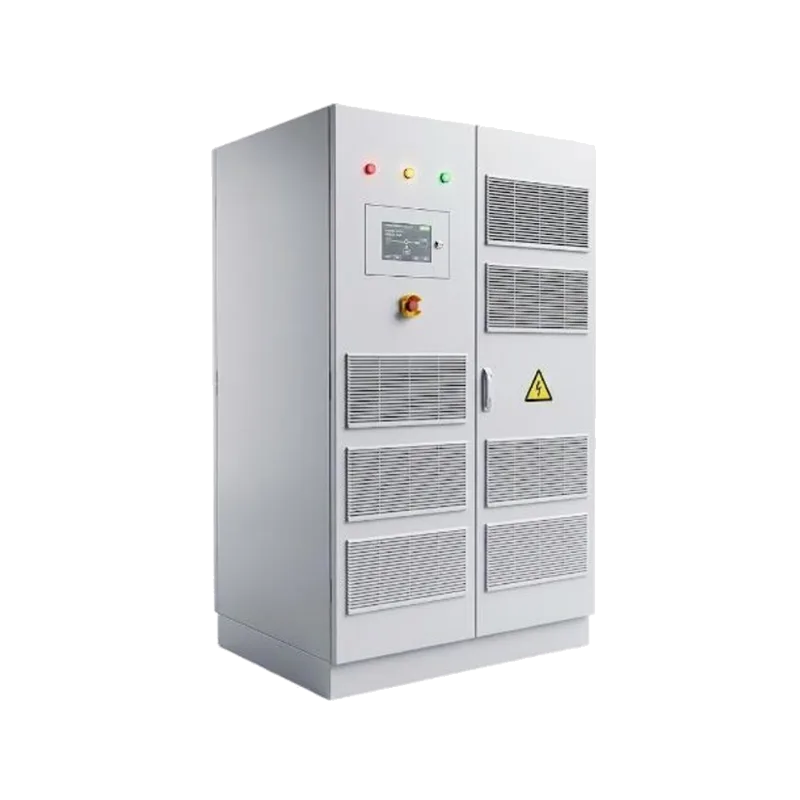
All-in-one hybrid inverter
- IntegrationPCS + MPPT + EMS + distribution
- Battery side680–950 V, max 600/800 A
- PV input120 kW × 3 / × 4
- EnclosureIP54, plug-and-play
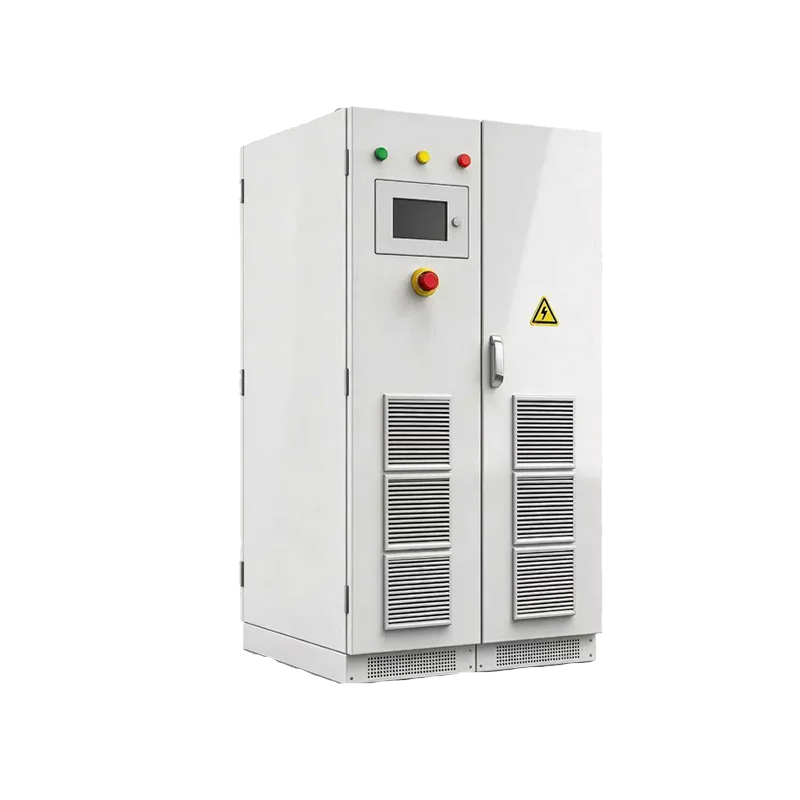
Hybrid inverter with isolation transformer
- IsolationBuilt-in transformer
- Battery side680–950 V, max 400 A
- InterfacesGenset / PV / battery
- EnclosureIP54
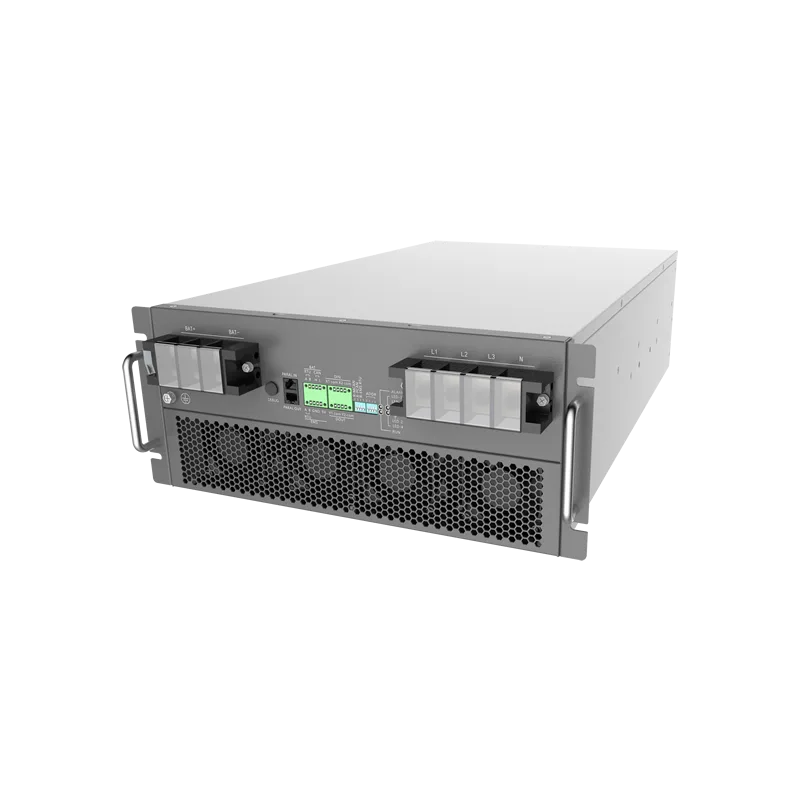
Microgrid storage converter
- Rated power125 kVA
- Transfer timebelow 10 ms (STS option)
- CouplingDC or AC
- Peak efficiency98.5%
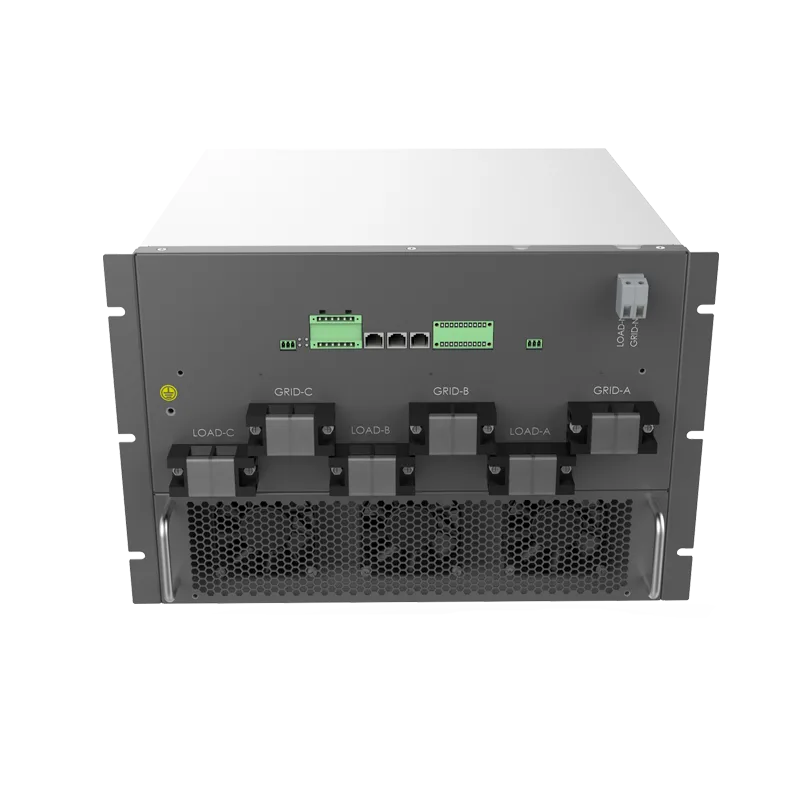
Static transfer switch
- Rated power200 / 400 / 600 kW
- Transfer timebelow 20 ms
- Grid tolerance400 V/230 V, −20% to +15%
- StandardsSupports multiple national transfer rules
8. Scope split and ways to work together
What we deliver
Design, build, commission, accompany.
- Load study and 8,760-hour simulation report
- Single-line diagram, cabinet layout, protection settings
- EMS strategy configuration and localized UI language
- Factory FAT, site SAT and O&M training
What we need from you
The more precise, the better the design.
- 3–12 months of typical daily load curves or meter logs
- Tariff structure, landed diesel price, local incentives
- Site coordinates, altitude, temperature, salt mist, dust
- Footprint, transport, cabling and lifting constraints
How to engage
Choose by delivery depth.
- Full system: cabinets + EMS + installation guidance
- PCS / module supply into your own integration
- OEM / ODM under your brand, structure and certification
- EPC support alongside your design institute
Grid compliance — systems can be engineered to the interconnection code applicable in your market, including IEC 62109, IEC 62477, EN 50549, IEEE 1547 and UL 1741 based designs. Final acceptance always follows the local utility rule.
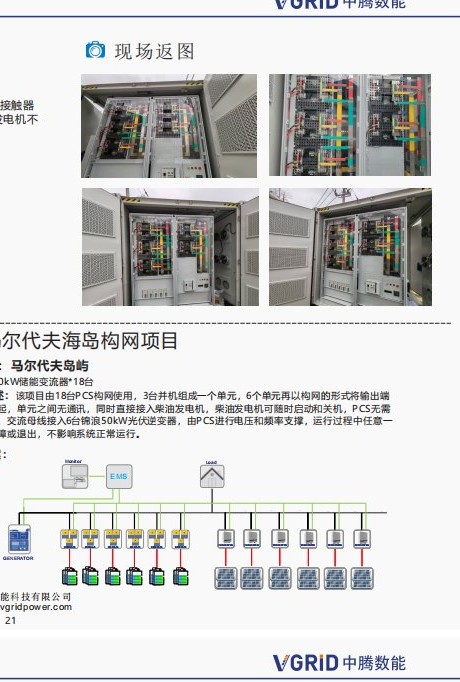
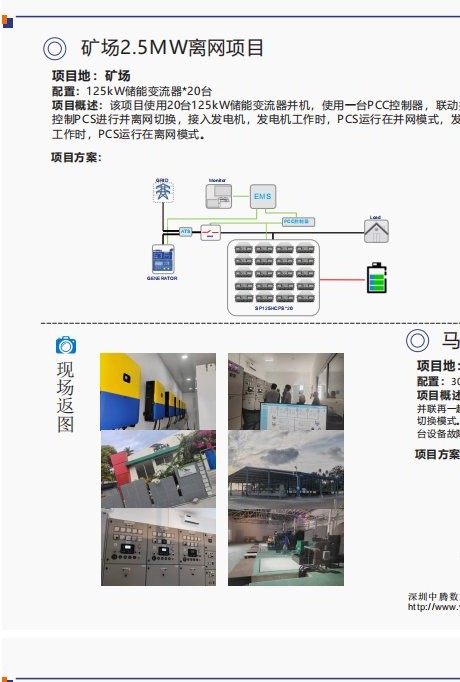
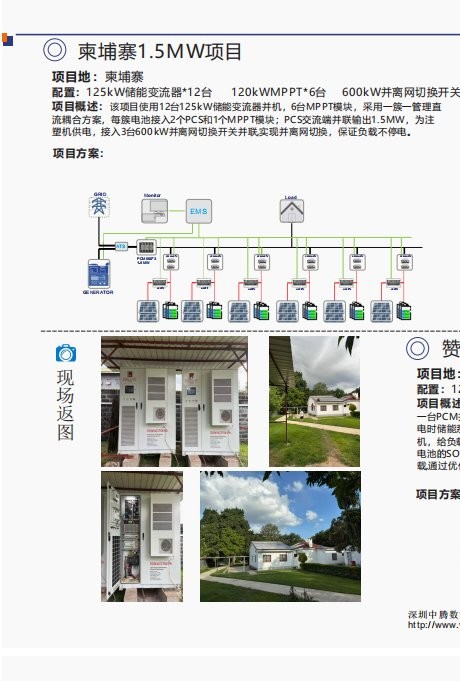
9. Applications and results

10. Frequently asked
What exactly does the customization premium buy?
Mostly engineering hours, non-standard cabinets and additional routine tests. On projects with autonomy requirements or heavy fuel use, better sizing usually pays that premium back within two to four years — and avoids buying a whole size class more hardware just to feel safe.
We only have rough load estimates so far.
That is fine for a first pass. We start from sector-typical duty cycles, give you a power/capacity envelope and a payback range, then converge once actual meter data arrives.
We will expand later — what should we protect now?
Reserve bus capacity, paralleling interfaces and physical cabinet space, and plan for SOC balancing between phase one and phase two racks. Under AC coupling, adding PCS capacity and adding batteries are independent.
Can you build under our brand?
Yes. For integrators and brands we supply bare converters or full units with your colour scheme, labelling, documentation language and market-specific certification support.
Send us your load profile and site conditions
Share site location, daily load curve, required autonomy and any existing transformer or genset — we return a simulated configuration with pricing.
Request your customized proposalOff-Grid Microgrid Customization
off-grid microgrid engineering for sites without reliable mains for islands, mining sites, oilfields, pastoral regions and telecom bases.
Grid-Tied Peak-Shaving Customization
grid-tied microgrid engineering targeting demand charges and time-of-use tariffs for factories, industrial parks and retail complexes with high demand charges.
Grid-Forming & Weak-Grid Customization
grid-forming VSG control and weak-grid adaptive microgrid engineering for weak grids at long feeder ends, mining areas and regions with high renewable penetration.
Solar-Storage-Charging Customization
microgrid engineering coordinating PV, storage and EV charging for industrial parks, fleet charging depots and retail complexes.
Diesel-Storage Hybrid Microgrid Customization
microgrid engineering combining diesel generation with battery storage for off-grid mining sites, oilfields and construction camps with unreliable fuel supply.