

Solar-Storage-Charging Customization
microgrid engineering coordinating PV, storage and EV charging for industrial parks, fleet charging depots and retail complexes.

Solar-storage-charging: one bus for PV, batteries and chargers
Charging sites hit the same wall everywhere: size the transformer for maximum simultaneous charging and the asset idles most of the day; size it for average demand and it trips at peak. Integration solves it by putting PV, storage and chargers on one bus under one controller — storage shaves the charging spike, PV displaces daytime purchases, and the EMS schedules charging — delivering more service capability without, or with far less, reinforcement.
- 1.5–2×Charging capability from the same transformer
- above 80%Realistic PV self-consumption target
- below 20 msSupport for critical loads during dips
- 15 minDemand window used for charge control
1. Where integration pays
Whenever carport or rooftop PV sits alongside clustered charging demand, one integrated design beats three separate ones.
Campus and factory fleets
Vehicles parked while PV peaks, charged in the evening; the same storage can serve the plant's peak shaving.
Logistics hubs and truck stops
High power per bay with real simultaneity; storage pools the power and several units run in parallel.
Bus and municipal depots
Charging windows are schedulable, so control can be tied directly to tariff periods and duty rosters.
Motorway service areas
Holiday peaks dwarf weekday traffic; storage releases idle capability exactly when it is needed.
Mining and port fleets
Often at the end of weak feeders or off-grid, needing coordination with gensets and captive networks.
Offices and retail
Tight distribution capacity with dispersed bays; multiple clusters benefit from unified scheduling.
2. Choosing how to release capacity
Three routes, and in practice the winner is usually storage plus managed charging.
Reinforce the transformer
Simplest to understand, heaviest to execute.
- Pros: solved once, no complex control afterwards
- Cons: idle capacity, long permitting and works programme
Managed charging
No new hardware, just scheduling.
- Pros: lowest cost
- Cons: longer driver waits, constrained fleet rosters
Storage as dynamic capacity
Cover the gap with the battery.
- Pros: no external works, plus shaving and backup value
- Cons: needs precise EMS control and cycle-life checks
3. AC or DC bus
| Aspect | AC bus | DC bus |
|---|---|---|
| Conversion stages | PV, storage and chargers convert independently | DC/DC stages share one bus, fewer conversions |
| Compatibility | Free choice of off-the-shelf chargers | Requires DC chargers or DC/DC coupling |
| Staged growth | Add subsystems at any time | Bus capacity must be planned upfront |
| Best for | Most retrofit sites | New high-power DC fast-charging hubs |
4. Six items you cannot skip
Diversity factor, not nameplate sum
Do not simply add charger ratings. Estimate simultaneity from vehicle mix, dwell time and roster, then derive usable transformer capacity and storage power.
Power pooling and dynamic allocation
Group terminals into one power pool and allocate by vehicle SOC and departure time, with storage covering the short-term deficit.
Demand control and tariff strategy
Control purchased power on a 15-minute sliding window; recharge off-peak and discharge into peak so you never cross into a higher demand band.
Anti-backflow and power quality
Where export is not permitted, enable anti-backflow and let storage plus mitigation functions hold harmonics and voltage within limits.
Safety zoning and fire provisions
Separate storage and charging zones; provide insulation monitoring, fire interlock and emergency shutdown. Basement car parks must be checked against local fire rules early.
Leave room for V2G
If vehicle-to-grid is on the roadmap, reserve bidirectional power paths and settlement interfaces now rather than retrofitting later.
5. Sizing the storage
Caution — heavy trucks and port tractors create very short high-power requests. Check instantaneous overload capability, not just average power.
6. Typical configurations
| Station | Charging build | Storage | Control focus |
|---|---|---|---|
| Campus commuter | 10–30 AC points plus a few DC units | 250–500 kW / 0.5–1 MWh | Shared with site peak shaving |
| Logistics / truck stop | 4–10 high-power DC bays | 1–2 MW / 2–4 MWh | Power pooling and overload checks |
| Bus / municipal depot | Group-controlled clusters | 0.5–1.5 MW / 1–3 MWh | Roster-linked charging and arbitrage |
| Motorway service area | Sized for holiday peaks | 0.5–2 MW / 1–4 MWh | Short seasonal peak support |
7. Recommended platforms
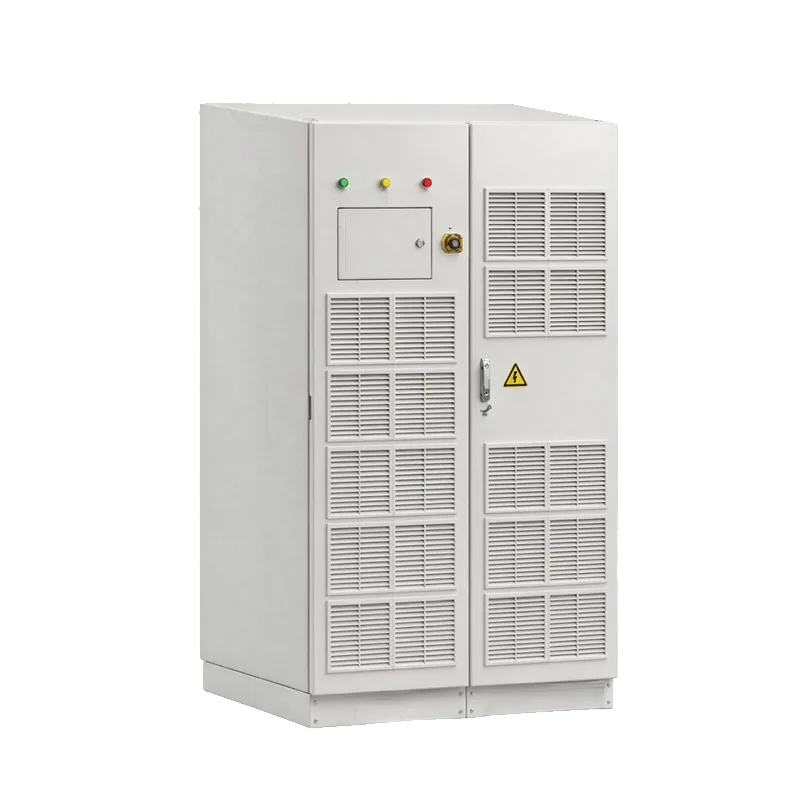
High-power integrated cabinet
- Rated power750 kVA (500/625 kVA variants)
- IntegrationPCS + EMS + transformer + distribution
- ParallelingMultiple cabinets
- EnclosureIP54
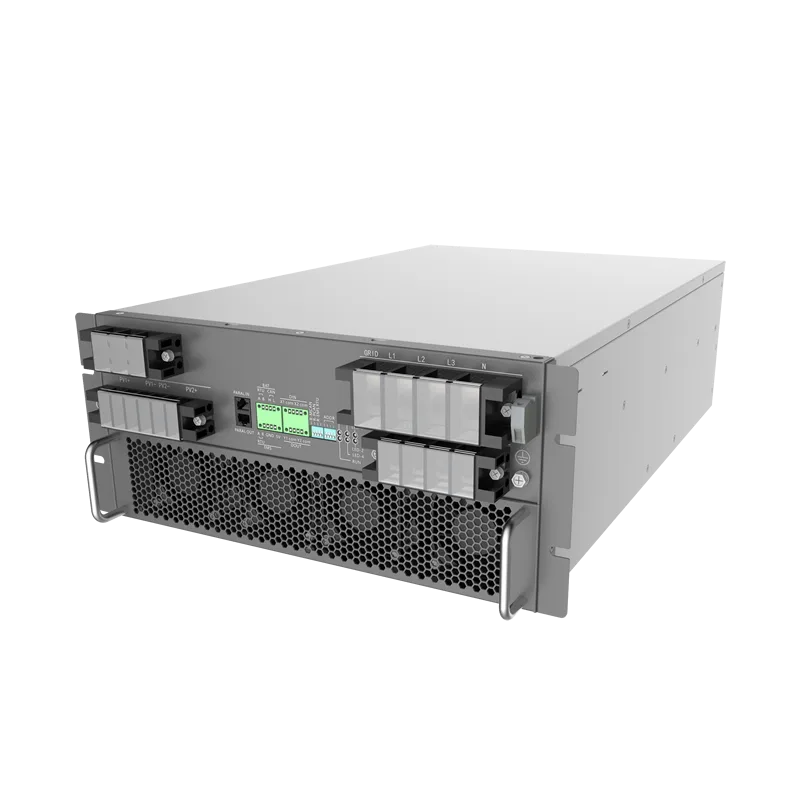
Hybrid inverter
- Grid power60 / 50 / 40 / 30 kVA
- Off-grid outputSame class
- Peak efficiency98.2%
- FeatureBuilt-in transfer, paralleling, 280/314 Ah cells
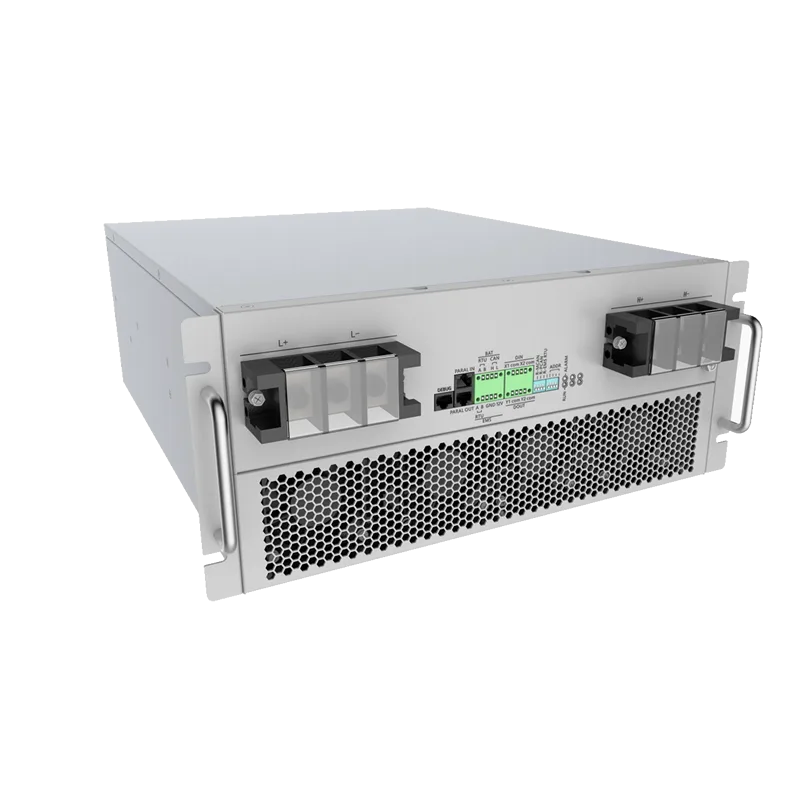
Bidirectional DC/DC controller
- Rated power210 kW
- Voltage range200–950 V
- Peak efficiency99.2%
- PurposePV and battery coupling on a DC bus
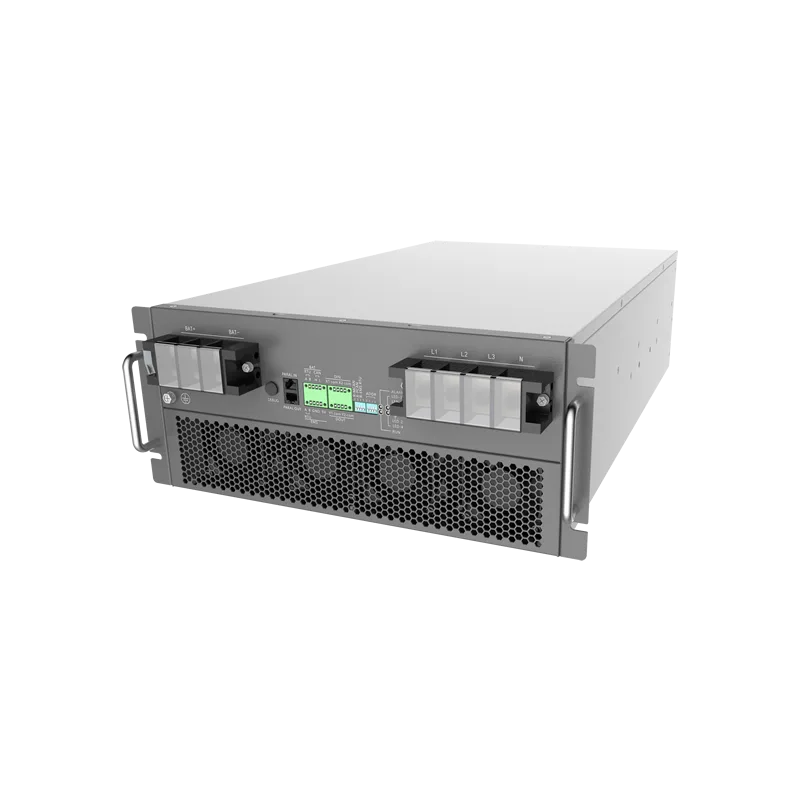
Microgrid storage converter
- Rated power125 kVA
- CouplingDC or AC
- Transferbelow 10 ms
- Peak efficiency98.5%
8. Delivery sequence
Site survey
Distribution capacity, external works, carport area, fire requirements and bay layout.
Load and roster model
Fleet size, arrival SOC distribution and departure times; derive simultaneity and daily demand.
Options and economics
Compare reinforcement, pure managed charging and storage with capex and payback.
Design and permitting
Single-line diagram, zoning and fire design, complete submission pack for local approval.
Install and commission
Full FAT, charger protocol integration and demand-control tests.
Operations tuning
Verify pool parameters against real throughput and deepen the scheduling gradually.
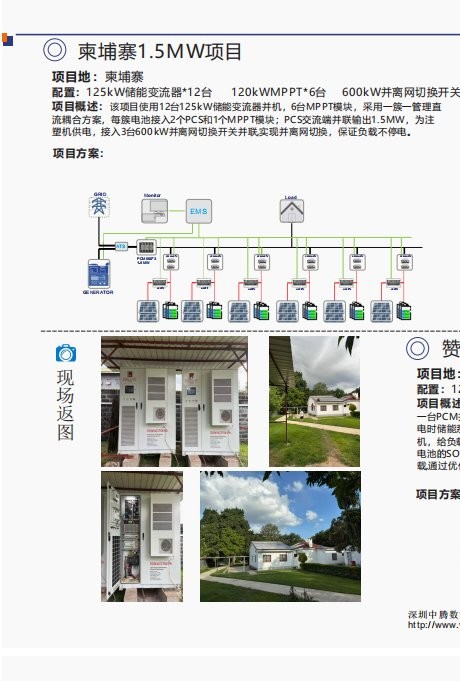
9. Sites in service



10. Frequently asked
Storage or reinforcement — which wins?
Where peak-valley spreads and capacity constraints are significant, storage usually wins because it also earns arbitrage revenue and provides backup. If the site will run heavy loads continuously forever, reinforcement remains the necessary foundation.
Will retrofitting shut the site down?
Connection normally happens in an off-peak or overnight window, with cabinets pre-positioned beforehand; the outage typically lasts a few hours.
Can mixed charger brands be managed together?
Usually yes. Power pooling typically issues setpoints over standard protocols; send us the charger list and we confirm coverage.
What if we want V2G later?
Reserve bidirectional power paths, metering and communication interfaces up front, then only add the protocol and settlement layers later.
Bring capacity data and fleet numbers, get a model back
Share transformer capacity, charger types and counts plus vehicle rosters; we return suggested storage power and capacity with three routes compared.
Request a solar-storage-charging proposalNo products in this category yet — product series are being published. Enquire for the full range.